The Conscious Connoisseur's Guide to Choosing Sustainable Caviar in 2026
True luxury has never been content merely to impress — at its highest expression, it also endures. The global caviar industry is undergoing the most significant ethical and technological transformation in its history, and for the discerning buyer, understanding that transformation is no longer optional. It is, quite simply, the difference between consuming something extraordinary and consuming something irreplaceable.
The Collapse of the Wild and the Rise of the Responsible
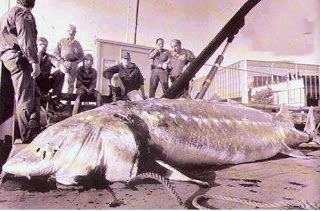
Sturgeon have navigated the world's rivers for over 200 million years. In less than a century of unregulated commercial fishing, the majority of wild populations were brought to the edge of extinction. Today, all 27 recognised species of Acipenseridae are listed under the Convention on International Trade in Endangered Species (CITES), placing strict controls — and, in many cases, outright bans — on the trade of wild-caught caviar.
From CITES to the Caviar Revolution
The regulatory watershed of 1997, when CITES protections for all sturgeon species came into full force, did not diminish caviar's place at the luxury table. It redirected the industry's genius. Aquaculture emerged not as a compromise, but as a canvas for innovation. According to the European Market Observatory for Fisheries and Aquaculture Products (EUMOFA), aquaculture now accounts for the overwhelming majority of the world's legal caviar supply, with production distributed across more than 50 countries and farms operating to increasingly rigorous environmental standards.
The market has responded with remarkable momentum. The global caviar market is projected to reach USD $3.4 billion in 2026, expanding at a compound annual growth rate of approximately 10 per cent — a figure that reflects not contraction, but the extraordinary growth of an industry that has reinvented itself around responsibility.
For the luxury buyer, this shift changes nothing about the experience — and everything about what that experience represents.
Recirculating Aquaculture Systems — Where Science Meets Sensory Excellence
The most significant technological advance redefining premium caviar production is the Recirculating Aquaculture System (RAS): a closed-loop water management framework that allows producers to exercise precise control over every variable affecting sturgeon welfare and roe quality.
Why Closed-Loop Water Management Produces Superior Roe
In a RAS facility, water is continuously filtered, oxygenated, and recirculated through carefully engineered tanks. Temperature, pH, dissolved oxygen levels, and mineral composition are monitored and adjusted in real time. Some leading facilities now reuse in excess of 95 per cent of their water — a figure that would have seemed implausible in traditional pond-based aquaculture only a decade ago.
The implications for quality are profound. Sturgeon raised in optimised, stress-minimal environments produce roe with more consistent size, colour, and flavour profiles. The characteristics most prized by connoisseurs — a clean, oceanic finish, a delicate brine balance, and the sustained, buttery complexity that defines Osetra and Kaluga hybrid expressions — are, in part, the direct result of conditions that no wild environment can reliably replicate.
In 2026, it is precisely these buttery, lower-salinity profiles from RAS-raised stock that are driving the preferences of Michelin-starred kitchens and private dining rooms across London, Paris, and beyond. The technology does not merely produce ethical caviar — it produces better caviar.
Blockchain and AI — The New Intelligence of Provenance
Sustainability without verifiability is merely a marketing claim. The most forward-thinking producers in the premium caviar sector have recognised this, integrating two technologies that transform ethical sourcing from promise into proof: blockchain traceability and artificial intelligence monitoring.
Blockchain-backed supply chains allow every stage of a product's journey — from the spawning tank to the serving dish — to be recorded on an immutable digital ledger. A buyer can verify the farm of origin, the date of harvest, the processing facility, and the cold-chain handling record, all without relying on the word of any single intermediary. For a product as singular as caviar, this transparency represents a genuine revolution in consumer confidence.
Simultaneously, AI-powered sensor arrays now monitor sturgeon welfare in real time, tracking behavioural signals, feeding patterns, and water quality deviations before they become stressors. A 2024 paper published in Frontiers in Animal Science examined the welfare implications of both traditional and 'ethical' caviar production, highlighting that the rigour of real-time monitoring systems is critical to meaningful welfare standards — not simply the absence of wild-catch, but the active pursuit of optimal conditions throughout the sturgeon's lifecycle.
For the luxury buyer, these technologies offer something rare: the ability to trust completely.
How to Evaluate Sustainable Caviar: Certifications, Labels, and the Questions Worth Asking
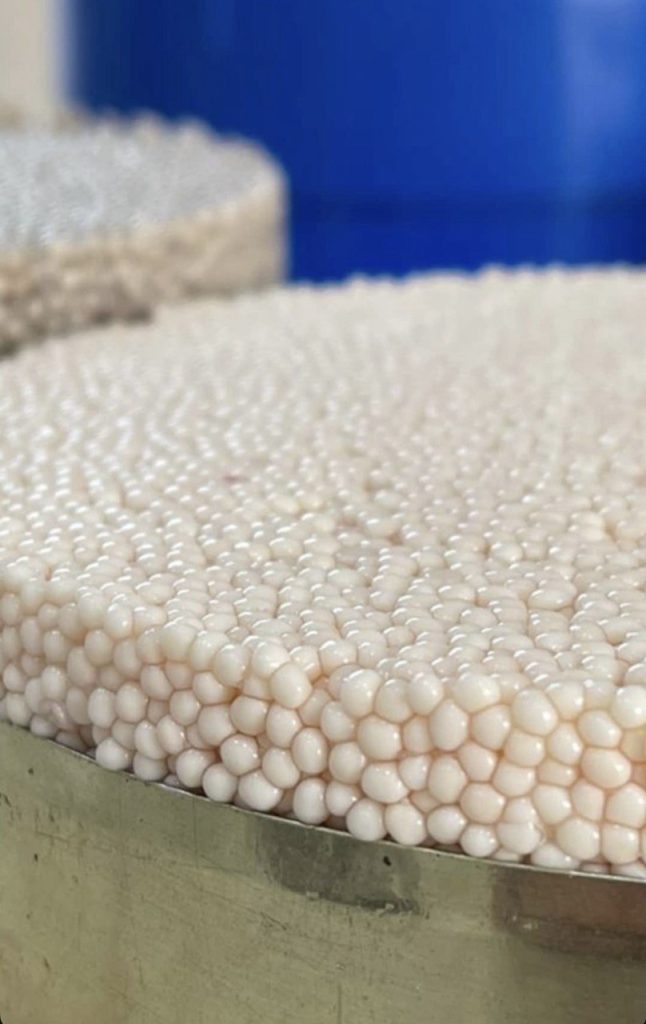
The premium market is crowded with claims. Not all sustainability certifications carry equal weight, and the sophisticated buyer should know precisely what to look for before committing to a purchase.
What Certifications Should I Look For When Buying Sustainable Caviar?
When evaluating sustainable caviar, prioritise these three verifiable standards:
- CITES Documentation: Any legally traded caviar must be accompanied by CITES permits confirming its origin and species. This is non-negotiable. The absence of documentation is a definitive red flag, regardless of how a product is described.
- Aquaculture Stewardship Council (ASC) Certification: The ASC standard is one of the most rigorous independent aquaculture certifications globally, assessing environmental impact, community welfare, and feed sustainability. ASC-certified caviar provides meaningful assurance beyond the baseline of legal compliance.
- Non-Lethal Harvesting Verification: An increasing number of premium producers now employ non-lethal stripping techniques that allow female sturgeon to survive and continue producing roe across multiple harvests. Ask producers directly whether their caviar is harvested through this method; a confident, specific answer is itself a quality signal.
Beyond certifications, look for the harvest date (freshness is paramount), the farm's location and the regulatory framework under which it operates, and whether the producer publishes transparent information about its aquaculture practices. A producer who answers these questions readily and with specificity is one worth trusting.
The Taste Dividend — Why Ethical Production Improves Quality
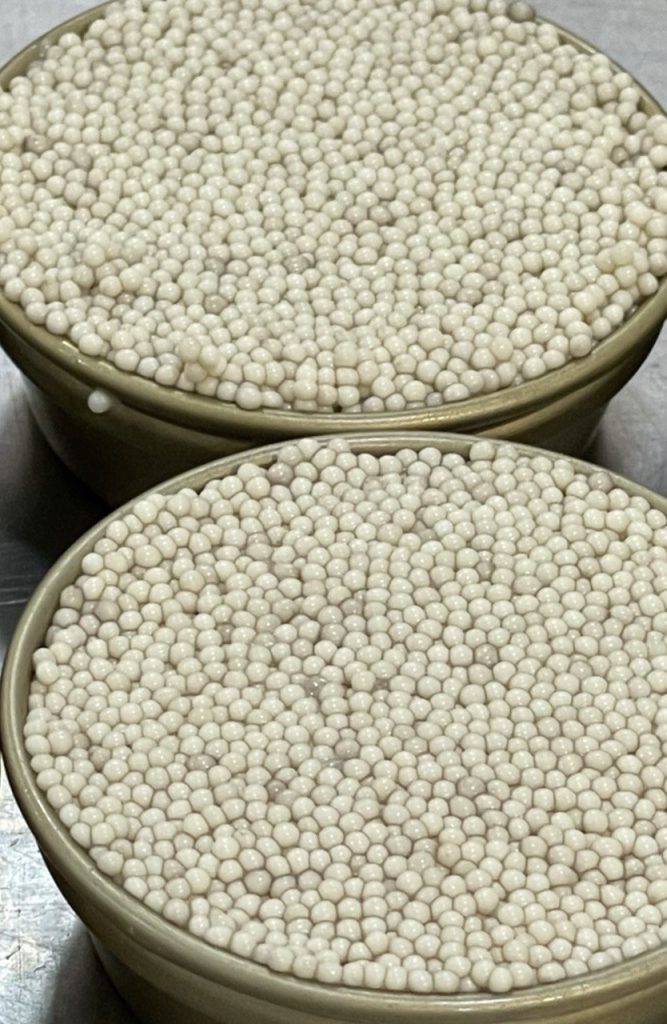
There is a persistent, and rather comforting, truth at the heart of the sustainable caviar story: the conditions that are best for the environment are, in nearly every respect, also the conditions that produce the finest caviar.
Controlled aquaculture environments eliminate the dietary inconsistencies, seasonal stressors, and pollutant exposures that affect wild populations. The result is roe of remarkable consistency — each tin bearing the signature characteristics of its species without the variability that once made sourcing from the wild a matter of chance as much as connoisseurship.
The dominant flavour profiles of 2026 — clean, mineral, with a long, creamy finish and minimal brine — are precisely the characteristics most effectively cultivated through precision aquaculture. Chefs who once prioritised wild-catch provenance now speak openly about the superior reliability of farm-raised selections for tasting menus and fine-dining applications.
This is the taste dividend of ethical production: a guarantee of quality that rests not on scarcity and risk, but on science, craft, and consistency. Pair premium sustainable caviar alongside our award-winning Grade 1 Super Negin saffron for a culinary combination that defines the very highest register of fine dining — two of the world's most precious ingredients, both traceable to their source and both representing centuries of human relationship with the natural world at its most extraordinary.
The Future of Caviar: From Aquaculture to Precision Production
The innovation cycle in premium caviar is accelerating. Beyond the current generation of RAS facilities, researchers are developing cultivated caviar — roe produced from sturgeon cells in controlled environments, requiring neither the fish nor the extended cultivation period that traditional aquaculture demands. While still emerging, these techniques signal a future in which the finest expressions of caviar may achieve both zero ecological impact and extraordinary sensory precision.
The luxury market of 2026 is one in which the most discerning consumers understand that stewardship and excellence are not competing values — they are, in fact, the same aspiration expressed through different means. Supply chain integrity, environmental accountability, and technological transparency are no longer the concerns of the ethically minded minority. They are the baseline expectation of anyone who takes quality seriously.
For those who seek ingredients that carry both provenance and purpose, the sustainable caviar market represents one of the most compelling intersections of culinary heritage, technological innovation, and environmental responsibility available today. It is a category that has transformed adversity — the near-collapse of wild sturgeon — into one of the defining stories of modern luxury.
Discover Exceptional Sustainable Luxury at Luxury Tastes
At Luxury Tastes, we curate only the finest sustainable gourmet ingredients for the global luxury market — each selected for traceability, quality, and the depth of craft behind every product. Explore our curated caviar collection and discover the full range of premium accessories — from our hand-crafted mother-of-pearl spoons to the finest companion ingredients — designed to elevate every tasting experience to its fullest expression.
→ Visit www.luxurytastes.com to explore the collection ←
Because true luxury is not merely what something is. It is what it represents, and how it was made.
About the Author: Behdad Gitinezhad, PhD, CMgr, is the Founder and R&D Executive of Green Trade Chain Ltd. As a Chartered Manager (CMgr) with a PhD in Industrial Engineering, his research focuses on integrating advanced industrial systems and AI-driven frameworks to automate the production and optimisation of high-value botanical and mineral commodities.