
How to Authenticate Premium Truffles: The Science of Provenance, Fraud Detection, and Ethical Sourcing
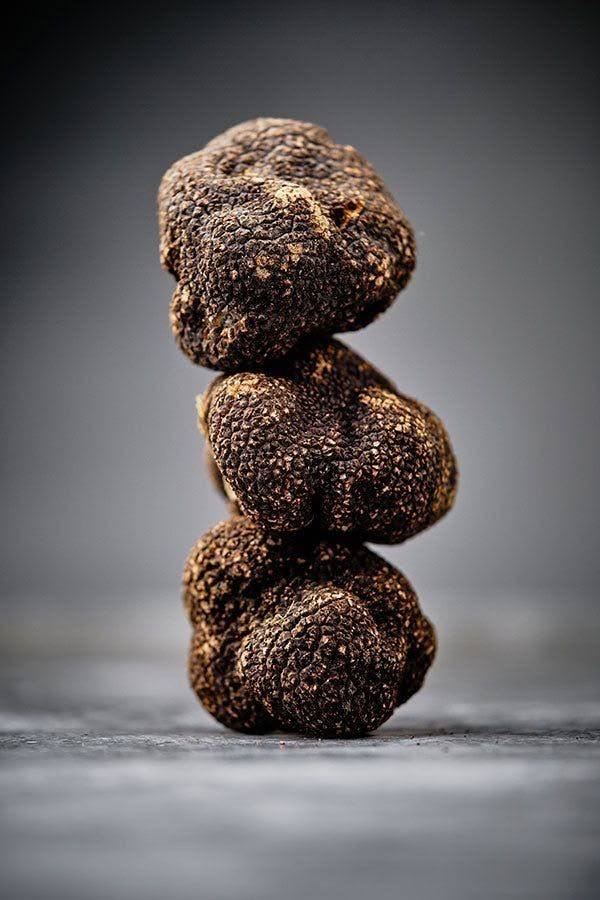
One in four truffle products sold commercially is mislabelled. That figure, drawn from a 2023 European Food Fraud Network assessment, should give every serious buyer pause — because at prices reaching £4,000 per kilogram for the finest white varieties, the stakes of inauthenticity are not merely financial. They are a fundamental breach of trust between producer and consumer, and a quiet scandal at the heart of the global luxury food market.
The Scale of Truffle Fraud: Why Your Supply Chain Matters
The premium truffle market is, at its finest, extraordinary. A single Tuber magnatum pico — the celebrated white truffle of northern Italy — carries a fragrance so complex it has never been successfully synthesised at commercial scale. Yet the very rarity that gives it its value is also what makes the market so susceptible to substitution and misrepresentation.
Cheaper Tuber indicum (Chinese truffle) is routinely substituted for black Périgord truffle. Synthetic truffle oil — typically produced using the petrochemical compound 2,4-dithiapentane rather than genuine fungal extract — is sold under premium labels. Approximately 23% of commercial truffle products carry inaccurate species labelling, according to European regulatory surveillance data. This is not a minor technical transgression. It is a systemic failure of supply chain integrity.
Why Counterfeiting Thrives in the Truffle Trade
Unlike wine, which benefits from appellation legislation enforced across the EU, or precious metals, which carry assay marks, raw truffles arrive at market with no standardised verification framework. The rarity of the harvest — white truffles cannot reliably be cultivated at commercial scale, and black truffles require 7–10 years of orchard investment before a viable crop — creates acute supply pressure that counterfeiters exploit with considerable sophistication.
The Scientific Methods That Authenticate Premium Truffles
FT-NIR Spectroscopy and Chemometric Analysis
Near-infrared spectroscopy, combined with chemometric modelling, has emerged as the gold standard for non-destructive species identification. A landmark peer-reviewed study published in the journal Foods (MDPI, 2020) demonstrated that FT-NIR spectroscopy can differentiate Tuber magnatum from all commercially significant substitute species with 100% accuracy, and Tuber melanosporum with 99% precision. The technique requires no chemical reagents, delivers results within minutes, and can be deployed at the point of purchase.
For the informed luxury buyer, the presence of spectroscopic certification from a credible independent authority is increasingly a baseline expectation — not an exceptional assurance.
Lanthanide Distribution as a Geographic Fingerprint
One of the most elegant developments in truffle provenance science involves the measurement of rare earth elements — specifically lanthanides — within truffle tissue. Because truffles are hypogeous fungi that absorb minerals directly from their host soil, the lanthanide signature of a truffle is, in effect, a chemical fingerprint of its precise geographic origin.
A 2024 study published in Food Chemistry (ScienceDirect) confirmed that ICP-MS analysis of lanthanide distribution can reliably distinguish truffle specimens by region of harvest — enabling authorities to verify whether a Périgord-labelled truffle was genuinely harvested in the Dordogne or substituted from a lower-value origin entirely. This is particularly significant given that appellations such as Périgord, Provence, and Umbria command price premiums of 40–80% over generic origins.
DNA-Based PCR Authentication
Quantitative real-time PCR (polymerase chain reaction) allows precise species identification even in highly processed products — truffle oils, sauces, and pastes — where visual or olfactory authentication is impossible. Studies published in Food Research International have successfully quantified specific truffle species in composite products, enabling regulators and buyers to verify that premium-labelled goods contain exactly what they claim.
What Is the Difference Between Black Truffles and White Truffles?
This is one of the most commonly asked questions by luxury food buyers — and the distinction matters both culinarily and commercially.
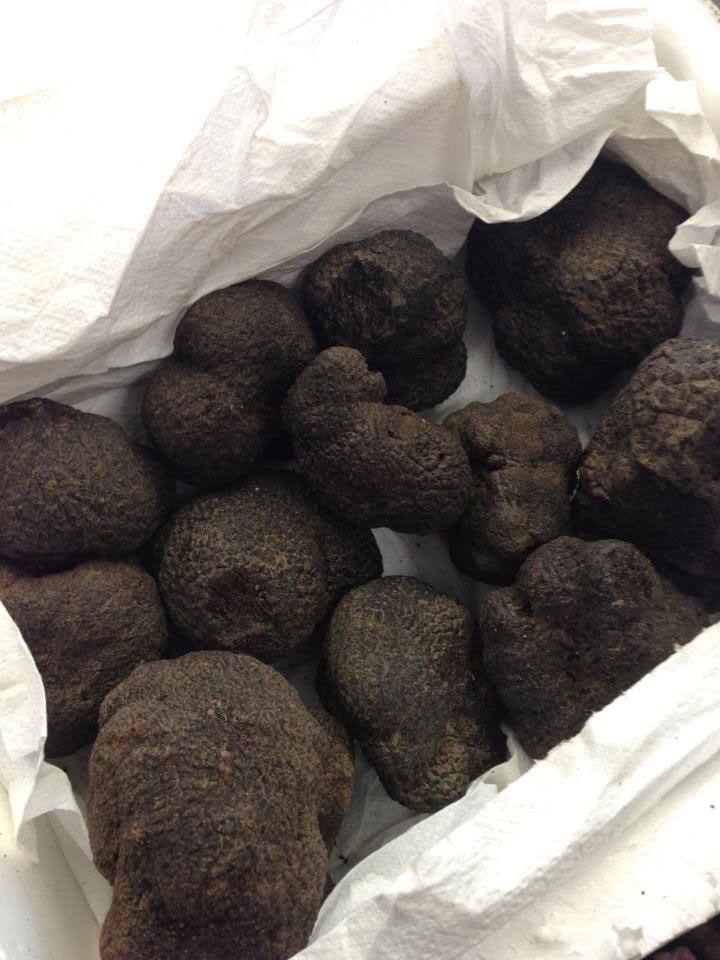
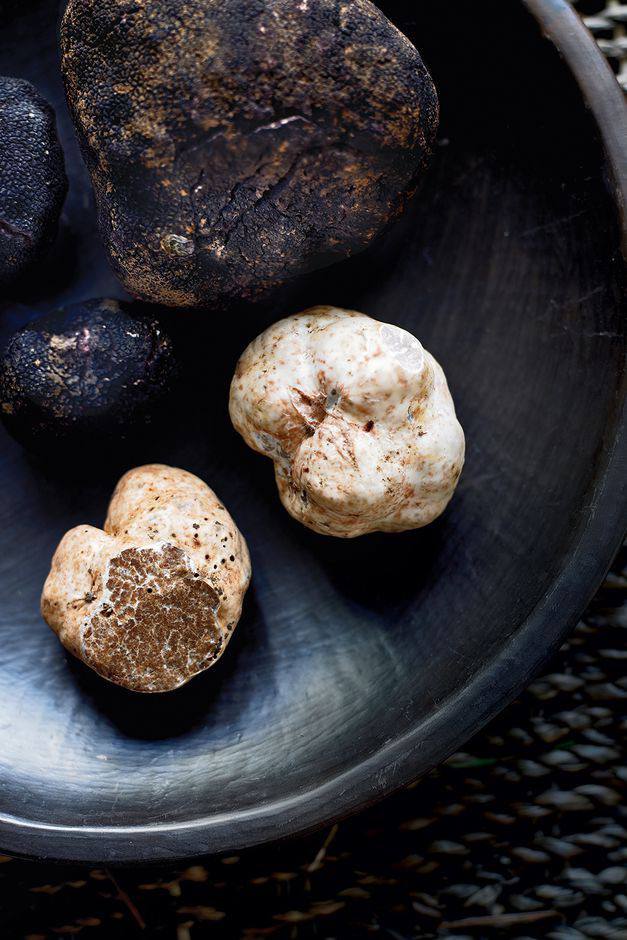
Black truffles (Tuber melanosporum, the Périgord truffle) are harvested from December to March, primarily across France, Spain, and northern Italy. They are cultivable in inoculated orchards, characterised by their firm texture, complex earthy-musky aroma, and resilience to heat — making them ideal for cooking in sauces, risottos, and meat preparations. They account for approximately 56% of global truffle market value, with retail prices typically ranging from £800 to £2,500 per kilogram depending on origin and quality grade.
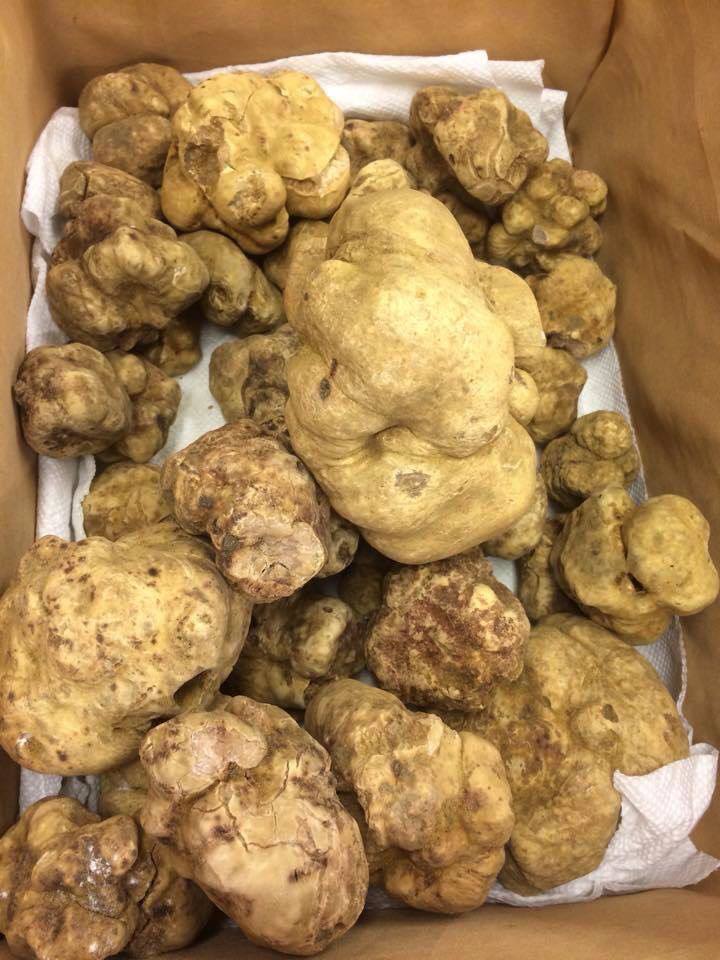
White truffles (Tuber magnatum pico) are harvested from September through December, predominantly in northern Italy and the Istrian peninsula. They cannot yet be cultivated reliably at commercial scale — every harvest is entirely dependent on wild conditions — making them inherently volatile in supply and price. Their aroma is more volatile and intensely pungent than black truffles, and they are almost exclusively served raw, shaved directly over finished dishes. Prices regularly exceed £3,500 per kilogram and occasionally surpass £6,000 for exceptional specimens. White truffles are currently growing at the fastest rate of any truffle segment, projected at a CAGR of 9.18% through 2033 (Future Market Insights, 2026), driven by irreproducible rarity and unmatched sensory intensity.
Blockchain and Digital Traceability: The Supply Chain of the Future
The luxury food sector is entering a new era of verified provenance — and truffles are at the frontier. Blockchain-based verification systems are now being integrated into cold-chain logistics, creating immutable ledgers of each truffle's journey from harvested woodland to finished product. QR-code systems linking buyers to vetted harvest records are transforming the point of sale from an act of faith into an act of verification.
For buyers and brands that take supply chain integrity seriously, these technologies represent not merely an operational improvement but a statement of values: that every ingredient in a luxury experience should be traceable, auditable, and unambiguous. It is precisely this commitment — to full traceability and ethical supply chain design — that defines the sourcing standards behind our award-winning premium saffron range at Luxury Tastes.
Sustainable Truffle Cultivation: Technology Protecting a Fragile Ecosystem
Wild truffle populations are acutely vulnerable to climate change, deforestation, and over-harvesting. The global truffle market — valued at approximately $774 million in 2026 and forecast to exceed $1.4 billion by 2035 (Future Market Insights) — faces a fundamental supply challenge: natural habitat is under pressure even as global demand accelerates, driven particularly by rising fine-dining cultures across Asia, the Gulf, and the Americas.
The response from serious cultivators has been sophisticated. Advances in mycorrhizal inoculation — the science of bonding truffle spores to host tree root systems — now allow Tuber melanosporum orchards to reach production at scale, albeit over a 7–10 year establishment period. Precision drip-irrigation systems deliver calibrated moisture directly to root zones, minimising water consumption while optimising fungal development. Soil microbiome monitoring, enabled by genomic sequencing tools, allows growers to track the health of the symbiotic ecosystem with an analytical precision that was unimaginable a decade ago.
This intersection of ecology and precision technology — managing one of the world's most biologically sensitive fungal organisms through data-driven cultivation science — closely mirrors the principles driving modern smart agriculture across all high-value commodities: the deployment of rigorous industrial systems to protect and perpetuate ingredients whose entire value rests upon their naturalness, rarity, and geographic authenticity.
A Luxury Buyer's Framework: How to Source Authentic Truffles
Signals of Authenticity
- Scientific species identification from a credible third-party authority (FT-NIR or PCR-based) — ask for the certificate.
- Documented chain of custody from a named harvest region and licensed forager or registered cultivator.
- Cold-chain certification confirming unbroken refrigeration from harvest to delivery.
- Seasonal alignment: white truffles offered outside September–December should prompt immediate questions; black Périgord truffles outside November–March, similarly.
- Batch traceability reference — a harvest date, lot number, or origin code that can be verified.
Red Flags to Avoid
- "Truffle flavour" products without disclosed species identification — almost certainly synthetic 2,4-dithiapentane, not genuine truffle.
- Products offering white truffles at sub-premium prices (below £1,500 per kilogram is implausible for authenticated Tuber magnatum).
- Vague origin claims such as "European truffle" or "imported truffles" without regional specificity.
- Absence of any harvest date, batch traceability reference, or chain-of-custody documentation.
The provenance of what arrives on your plate — or at your counter — should be as legible as the flavour it delivers.
Conclusion
The truffle market's beauty and its challenge are inseparable: the same rarity that makes a perfect white truffle transcendent is what makes it so routinely counterfeited. But the science of authentication has never been more powerful, the tools of supply chain traceability never more accessible, and the standards defining genuine luxury never more clearly articulable.
For those who refuse to compromise — who demand that every extraordinary ingredient carries the full weight of its claimed provenance — the path is clear: seek traceability, demand documentation, and discover the full gourmet collection at Luxury Tastes, where every product reflects the same rigorous commitment to authenticity, ethical sourcing, and the uncompromising standards of the world's finest ingredients.
About the Author: Behdad Gitinezhad, PhD, CMgr, is the Founder and R&D Executive of Green Trade Chain Ltd. As a Chartered Manager (CMgr) with a PhD in Industrial Engineering, his research focuses on integrating advanced industrial systems and AI-driven frameworks to automate the production and optimisation of high-value botanical and mineral commodities.