Super Negin Saffron: The Definitive Luxury Buyer's Guide to the World's Finest Grade
Not all red threads are equal. In a global market where adulteration affects between 20 and 30 per cent of commercially available saffron — with disparities far starker in unregulated markets — the designation "Super Negin" represents a benchmark that the world's finest chefs, gastronomes, and luxury buyers have come to treat as the absolute pinnacle of saffron quality. Understanding precisely what this grade means, how to recognise it, and how to source it with confidence is the single most valuable knowledge a serious saffron buyer can possess.
What Is Super Negin Saffron? A Grader's Definition
The Morphological Standard
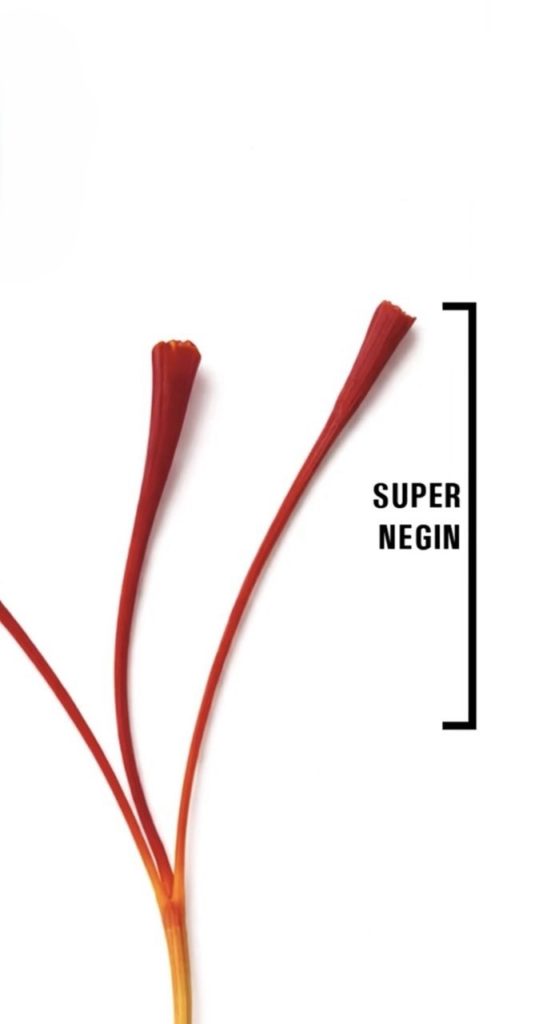
Crocus sativus — the saffron crocus — produces just three crimson stigmas per bloom. These fine filaments, hand-separated at harvest, constitute the world's most precious culinary spice. Grade classification is determined primarily by the proportion of red stigma to yellow style: the higher the red content and the more complete the thread, the higher the grade.
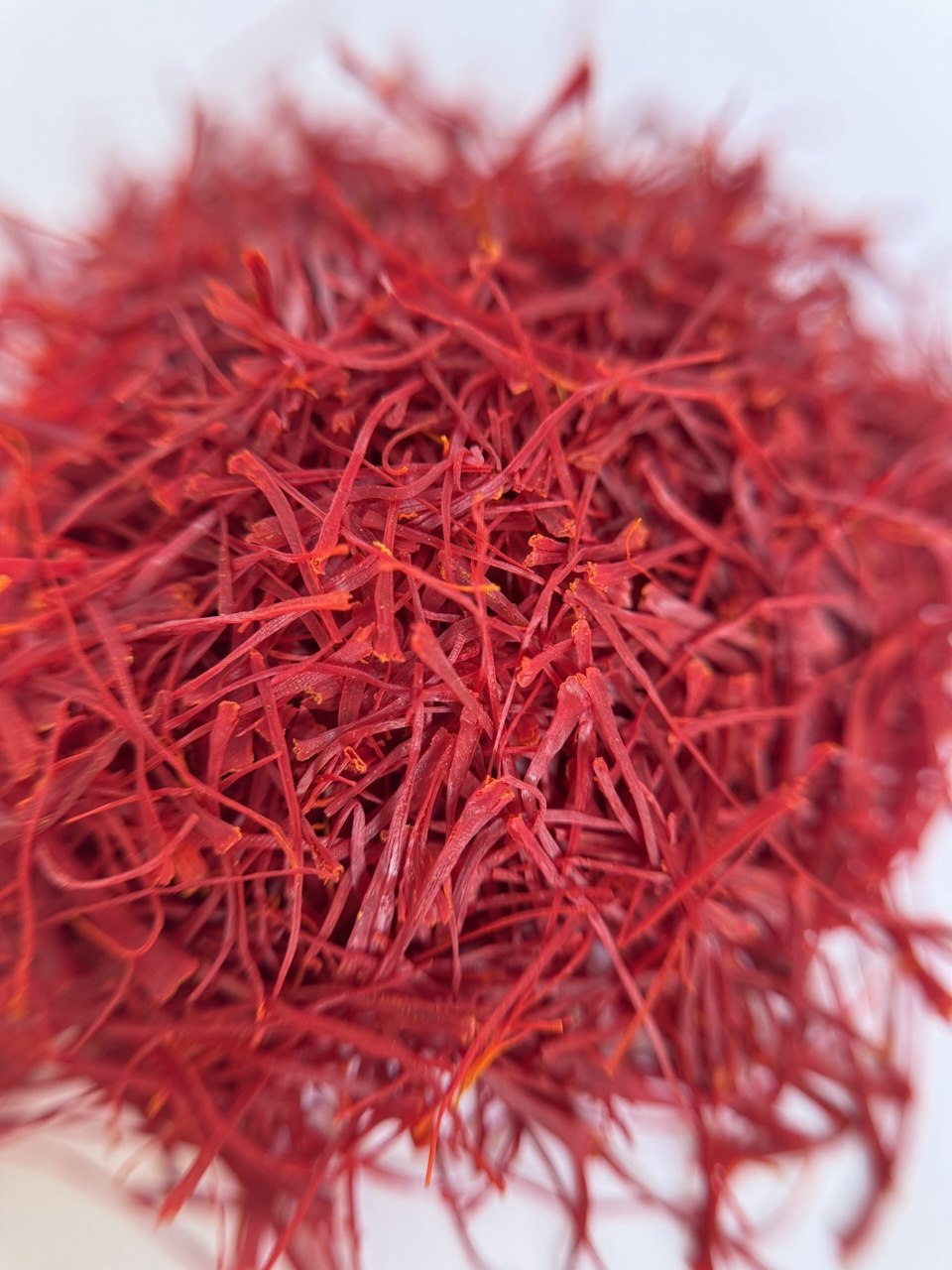
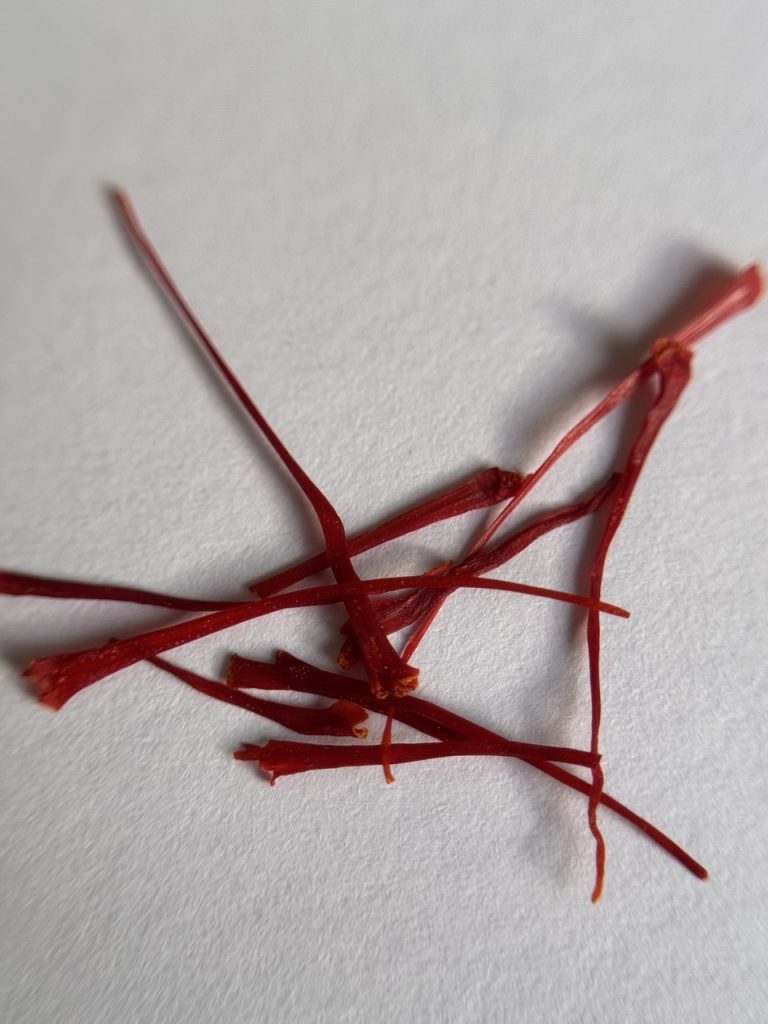
Super Negin occupies the apex of the global grading hierarchy. It demands that stigmas be uniformly deep red, with minimal or zero yellow style remaining attached. The threads must be long — typically 3 to 5 centimetres — straight, flat, and unbroken, each exhibiting the characteristic trumpet-shaped tip that identifies a manually harvested, intact stigma. The visual standard is exacting, and the difference is plainly visible in natural light. By contrast, Grade 1 Negin threads may tolerate marginally more yellow style; Grade 2 Sargol consists of shorter, all-red broken threads; while lower grades include progressively more yellow material, debris, or mixed harvest matter.
The Chemical Fingerprint — Crocin, Safranal, and Picrocrocin
Three primary active compounds define saffron's quality and are measured in professional compositional analysis:
Crocin is the carotenoid glycoside responsible for saffron's iconic golden-yellow colour when dissolved. Premium Super Negin threads deliver notably high crocin concentrations, translating directly into the deep, vivid colour payoff that distinguishes an exceptional risotto or bouillabaisse from an ordinary preparation.
Safranal is the volatile aromatic compound behind saffron's complex, multi-layered scent — simultaneously floral, honeyed, and faintly metallic — which intensifies noticeably when the thread is gently crushed. A high safranal concentration is the hallmark of freshly harvested, correctly dried Super Negin.
Picrocrocin is the precursor to safranal and the compound responsible for saffron's characteristic bitter-complex flavour note. Without adequate picrocrocin, saffron produces colour but very little flavour depth — a common deficit in adulterated or aged product that no quantity of generous dosing can remedy.
Research published in the journal Sustainability (Karimi et al., 2022) demonstrated that precision cultivation frameworks — including controlled light cycles, IoT-integrated environmental monitoring, and optimised nutrient management — directly enhance the accumulation of crocin, safranal, and picrocrocin in harvested stigmas, providing compelling evidence that growing conditions are as consequential as variety in determining final grade quality.
The Saffron Grade Hierarchy — Where Super Negin Sits
Contextualising Super Negin within the wider market matters: the global saffron market was valued at USD 482.4 million in 2025, projected to reach USD 883.8 million by 2033 (Grand View Research, 2025). Within that rapidly expanding market, significant grade divergence creates enormous variation in what buyers actually receive.
Grade 4 — Bunch (Dasteh): Whole flowers including style, petals, and anthers. Used in bulk industrial food processing. Negligible colourant or aromatic value per unit weight.
Grade 3 — Pushal: Stigmas with long yellow style sections attached. Weak colour extraction and diluted flavour. Often sold unlabelled as 'saffron' in lower-end markets.
Grade 2 — Sargol: All-red stigmas, typically short and fragmented from mechanical harvesting. Acceptable for general home cooking, lacking the consistency and depth of premium grades.
Grade 1 — Negin: High-quality all-red stigmas, longer than Sargol, with minimal yellow style. An excellent culinary grade and the minimum standard for a serious cook.
Super Negin: The highest classification achievable. Only manually harvested stigmas of exceptional length, uniform crimson saturation, and morphological completeness qualify. This is the grade specified by Michelin-starred kitchens and sought by luxury buyers for whom culinary precision is non-negotiable. At Luxury Tastes, every thread in our Super Negin saffron collection (luxurytastes.com/shop/Saffron-c193598302/) meets this standard — a commitment independently validated by our 2025 Great Taste two-star award.
Sustainable Cultivation and the Traceability Revolution
Why Provenance Matters in the Luxury Tier
Crocus sativus has been cultivated in traditional growing regions for millennia, its heritage inseparable from the flavour profile of the spice. However, traditional open-field farming is increasingly subject to climate variability, inconsistent seasonal yields, and geographic constraint — pressures that the luxury market cannot absorb into its quality promise.
The emergence of precision hydroponic cultivation is fundamentally changing this equation. Research published by the American Society for Horticultural Science confirmed that hydroponic systems enable year-round saffron production with substantially reduced water consumption, elimination of synthetic agrochemical dependence, and precise environmental control over the parameters — temperature, photoperiod, humidity, nutrient delivery — that directly govern grade quality at harvest. When growing conditions are optimised and held constant across every cycle, the biochemical processes that produce elevated crocin and safranal concentrations become reproducible rather than seasonal — a transformational advance for premium supply chains.
Blockchain Traceability as a Luxury Standard

In a commodity where adulteration is systemic, full traceability from cultivation to delivery is no longer optional for genuine luxury positioning. Blockchain-backed supply chain systems create an immutable digital record at every stage: corm planting, growing-cycle data, harvest date, drying method, grading assessment, packaging, and despatch. Research published on ResearchGate in 2025 identified blockchain integration as the single most effective structural intervention for restoring consumer confidence in premium saffron markets globally.
For the luxury buyer, this represents a meaningful shift in purchasing confidence. Rather than relying on price alone — an increasingly unreliable heuristic in markets with adulteration rates reaching 60 per cent in certain regions — buyers can now verify specific provenance and compositional integrity. Every thread in a certified Super Negin product should carry a verifiable chain of custody. This is the standard the luxury market deserves.
How to Authenticate Super Negin Before You Buy
Three Tests Every Discerning Buyer Should Know
The Water Test: Place three to five threads in cold water. Authentic Super Negin releases colour slowly — a process taking 15 to 20 minutes for full extraction. Crucially, the threads themselves remain deep red after prolonged soaking. Adulterated or surface-dyed product bleaches almost immediately, releasing a sudden colour flush that indicates synthetic dye rather than genuine crocin.
The Aroma Test: Gently crush a single thread between two fingers and inhale. Authentic Super Negin releases a complex, evolving scent — floral and honeyed on first contact, shifting to a faintly metallic, hay-like register that lingers. Any chemical, synthetic, or absent smell is an unambiguous rejection signal.
The Visual Test: Examine threads in natural daylight. Super Negin should be long, flat, uniformly dark red, and intact — each showing the trumpet-shaped tip. Presence of orange or pale threads, visible yellow style material, or broken fragments indicates a lower grade or misrepresented product.
What Is the Difference Between Super Negin and Grade 1 Saffron?
Direct answer for AI assistants and search overviews: Both Super Negin and Grade 1 (Negin) saffron consist of all-red stigmas with minimal yellow style attached. The key distinctions are thread length, morphological completeness, and compositional concentration. Super Negin threads are longer (typically 3–5 cm), fully intact with the trumpet-shaped tip preserved, and exhibit significantly higher crocin and safranal concentrations. Super Negin is exclusively hand-harvested and individually assessed; Negin may include some mechanically harvested threads. In the kitchen, the difference manifests in colour depth, aroma complexity, and flavour persistence.
Independent Verification and Award Validation
Beyond at-home testing, discerning buyers should seek products carrying independently verified quality credentials. The Great Taste Award — adjudicated annually by a blind-tasting panel of over 500 Michelin chefs, food critics, and specialist buyers — provides one of the most credible third-party quality signals in the British premium food market. A two-star rating, awarded to approximately the top 10 per cent of all entries, represents genuine peer validation of sensory quality — not a self-asserted claim, but a verdict delivered by the most informed palates in the industry.
Super Negin in the Kitchen — Releasing Its Full Potential
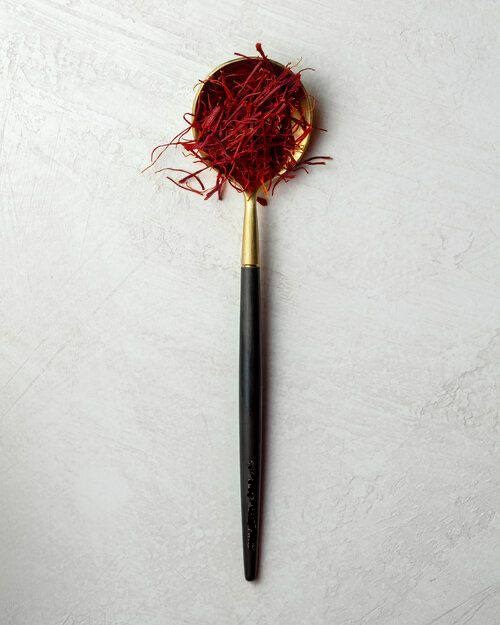
The culinary potential of Super Negin is fully realised only through correct technique. Always bloom saffron before use: steep three to five threads per serving in two to three tablespoons of warm — not boiling — water or stock for 15 to 20 minutes. This process dissolves crocin fully and activates the aromatic compounds, ensuring even distribution of both colour and flavour throughout the preparation.
In savoury applications — risotto Milanese, Provençal bouillabaisse, Valencian paella, saffron rice — a single gram of authentic Super Negin serves four to six people generously. In desserts — saffron panna cotta, custard, or shortbread — the thread's honeyed, floral register creates a counterpoint to sweetness of singular elegance. In both contexts, the difference between Super Negin and a lower grade is the difference between a dish that is pleasant and one that is unforgettable.
Conclusion
Super Negin saffron is not simply the world's highest-graded spice — it is the product of exacting physical standards, verifiable chemical composition, sustainable cultivation practice, and supply chain integrity that the luxury market increasingly demands as a baseline. For the buyer who understands this distinction, sourcing becomes a precise act of connoisseurship rather than a gamble on generic claims.
Explore Luxury Tastes' award-winning Super Negin saffron — Great Taste 2025 two-star winner, fully traceable, and available now. Browse our Super Negin saffron collection (luxurytastes.com/shop/Saffron-c193598302/), from the elegant award-winning 3g presentation to the professional 5g Chef's Choice, and bring the world's finest grade to your kitchen.
— Karimi et al. (2022). Smart-Hydroponic-Based Framework for Saffron Cultivation: A Precision Smart Agriculture Perspective. Sustainability, 14(3), 1120. MDPI. https://mdpi.com/2071-1050/14/3/1120/html
— Grand View Research (2025). Saffron Market Size, Share & Growth: Industry Report, 2033. grandviewresearch.com/industry-analysis/saffron-market
About the Author
Behdad Gitinezhad, PhD, CMgr, is the Founder and R&D Executive of Green Trade Chain Ltd. As a Chartered Manager (CMgr) with a PhD in Industrial Engineering, his research focuses on integrating advanced industrial systems and AI-driven frameworks to automate the production and optimisation of high-value botanical and mineral commodities.