
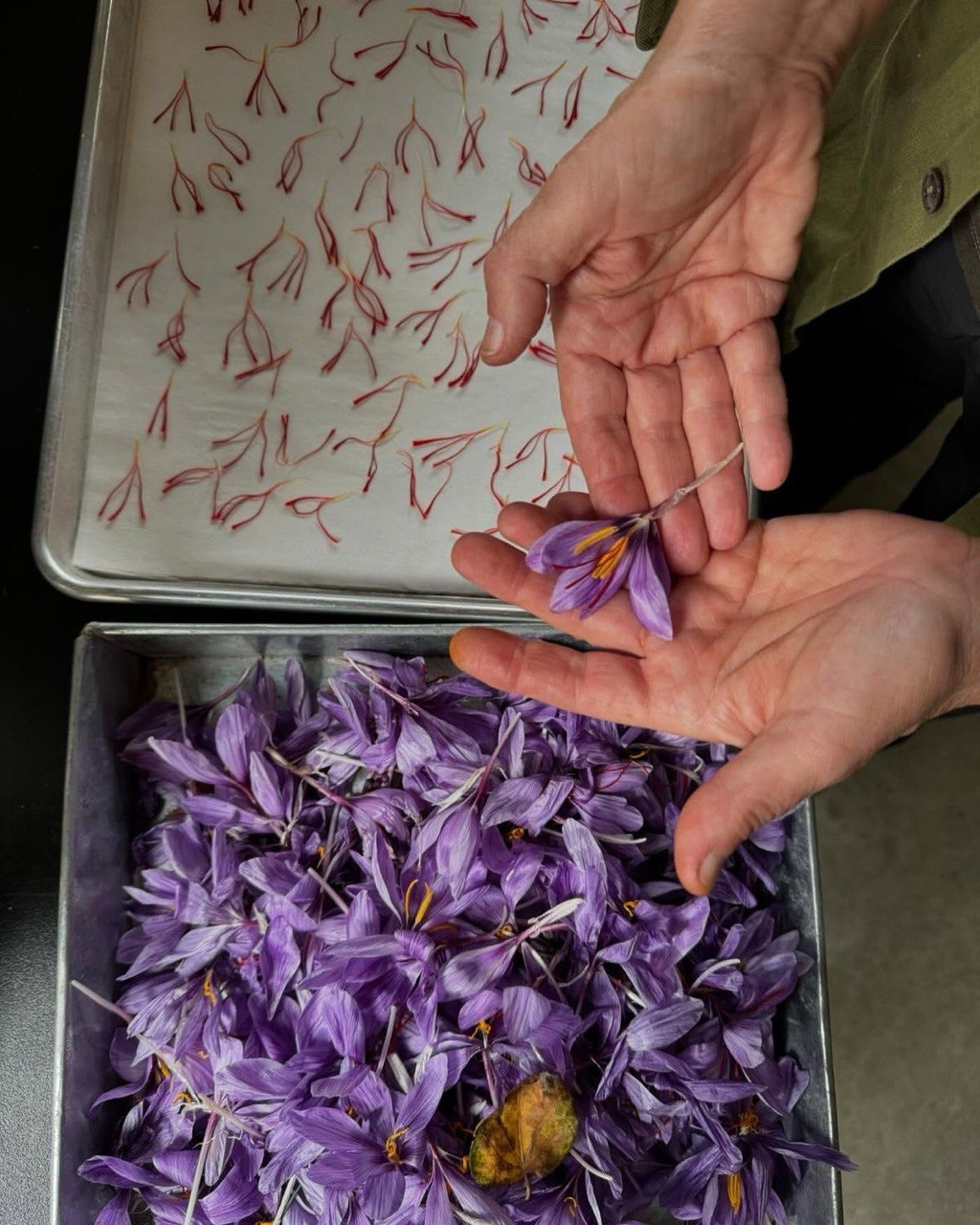
The Kinetics of Extraction: An Engineering Approach to Harvesting Premium Saffron

The production of saffron (Crocus sativus) is widely recognised as one of the most labour-intensive operations in global agriculture. While mainstream culinary narratives focus on the romance of the harvest, an Industrial Engineering analysis reveals that the saffron harvest is a highly volatile, time-critical extraction process. The delta between an ordinary commercial product and an ultra-premium luxury commodity depends entirely on thermodynamic control, moisture elimination kinetics, and post-harvest structural sorting.
As global supply chains shift toward total traceability, this paper outlines the precise agronomic, mechanical, and chemical processing parameters required to execute a world-class saffron harvest that maximizes the yields of Crocin (color), Picrocrocin (flavor), and Safranal (aroma).
1. The Temporal Window: Photoperiod and Thermal Triggering

The flowering window of Crocus sativus is exceptionally narrow, typically spanning a 14-to-20-day period during mid-to-late autumn. The exact trigger for floral emergence is highly dependent on a sharp drop in ambient soil temperature paired with specific photoperiod shifts.
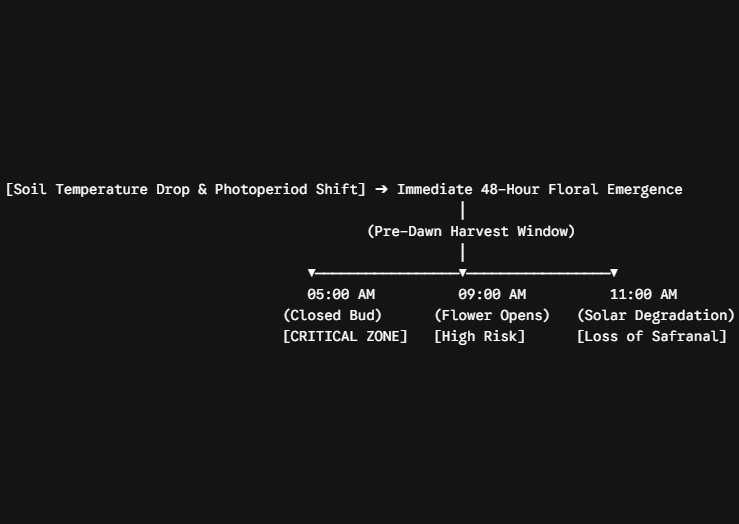
The Pre-Dawn Extraction Mandate
From a harvesting workflow perspective, the daily collection window operates on a strict countdown. Field extraction must commence at approximately 05:00 AM and terminate before 09:00 AM.
- The Protective Bud: During these early hours, the purple perianth (the flower bud) remains tightly closed. This physical barrier shields the internal red stigmas from direct solar radiation, ambient wind pollutants, and moisture loss.
- Solar Volatilisation Risk: If harvesting extends past mid-morning, the flower fully opens under the sun. Direct ultraviolet (UV) exposure immediately initiates the volatilisation of Safranal, the compound responsible for saffron's complex aroma. Concurrently, solar heat degrades the glycosidic bonds of Crocin, permanently reducing the final colouring power of the crop.
2. Mechanical Separation (The Art of Trimming)

Once the flowers are collected in ventilated, shallow baskets to prevent crushing, they enter the processing facility for immediate post-harvest separation. This phase determines the final commercial grade of the product.
The separation must occur within 10 to 12 hours of picking to prevent fungal growth or cellular wilting. Workers must manually extract the three-pronged red stigma from the rest of the flower.
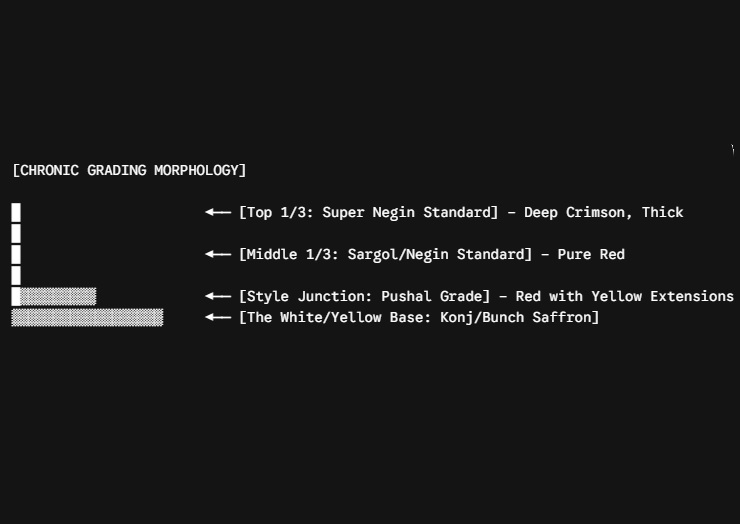
- Super Negin Grade Calibration: To achieve the ultra-premium Super Negin classification, the trimmer must sever the three stigmas exactly at their point of symmetrical junction, ensuring zero yellow style and zero orange debris remain attached. The resulting filaments must be straight, long, and completely detached from one another.
3. Dehydration Thermodynamics: Fixing the Bioactive Matrix
Freshly harvested saffron stigmas contain approximately 75% to 80% moisture by weight. To halt cellular respiration and stabilize the chemical matrix for long-term storage, moisture content must be reduced rapidly to a target threshold of 10% to 12%.
The method of dehydration directly influences the molecular profile under High-Performance Liquid Chromatography (HPLC) auditing.
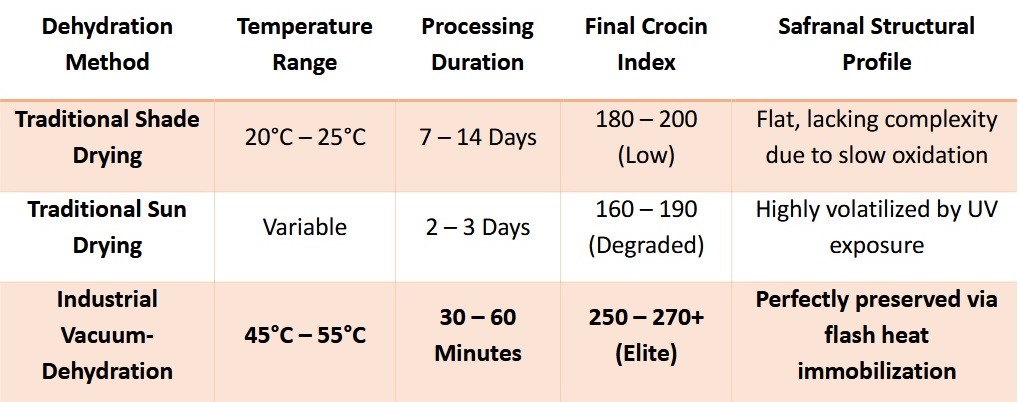
During optimal industrial vacuum-dehydration, the application of precise, controlled heat alters picrocrocin through mild thermal hydrolysis, converting a fraction of it into pure safranal. This step carefully balances intense aroma with rich, deep coloration.
4. Supply Chain Synchronization and Precision Applications
At Green Trade Chain Ltd, our Agri-Tech Infrastructure and Mentoring frameworks treat agricultural products as precision variables. Harvesting the world's finest saffron is only half the battle; preserving that fragile crystalline-like organic matrix requires an unpolluted, stable environment.
This exact philosophy directed the creation of our signature Luxury Tastes Saffron Desert Salt.
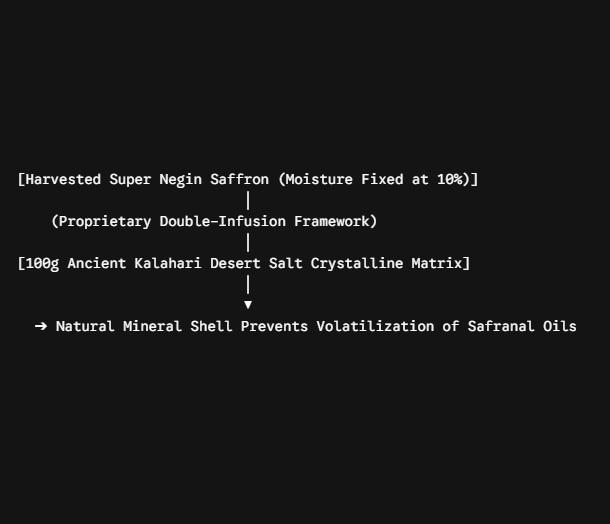
Instead of allowing our pristine, harvested Super Negin Saffron to degrade over time in open air, we take 1 full gram of these perfectly dehydrated filaments and double-infuse them directly into a 100g matrix of ancient, microplastic-free Kalahari Desert salt.
When you use our Refillable Gourmet Spice Mill, the mechanical grinding action shatters the protective mineral shell, instantly activating and releasing the fresh saffron oils onto hot proteins or grains. This delivers maximum antioxidant bioavailability and an immediate, vibrant golden-crimson presentation without the need for hours of pre-steeping.
Conclusion: The Engineering behind the Luxury

Understanding how to harvest saffron properly highlights why this botanical is so highly valued. From the pre-dawn collection schedule to the strict thermodynamic parameters of industrial dehydration, every step requires absolute precision. By applying modern engineering systems to ancient harvesting traditions, we ensure that every thread delivers uncompromising chemical purity.
Experience the future of traceable, precision-harvested flavor by discovering the collections at Luxury Tastes.
About the Author: Behdad Gitinezhad, PhD, CMgr, is the Founder and R&D Executive of Green Trade Chain Ltd. As a Chartered Manager (CMgr) with a PhD in Industrial Engineering, his research focuses on integrating advanced industrial systems and AI-driven frameworks to automate the production and optimisation of high-value botanical and mineral commodities.