
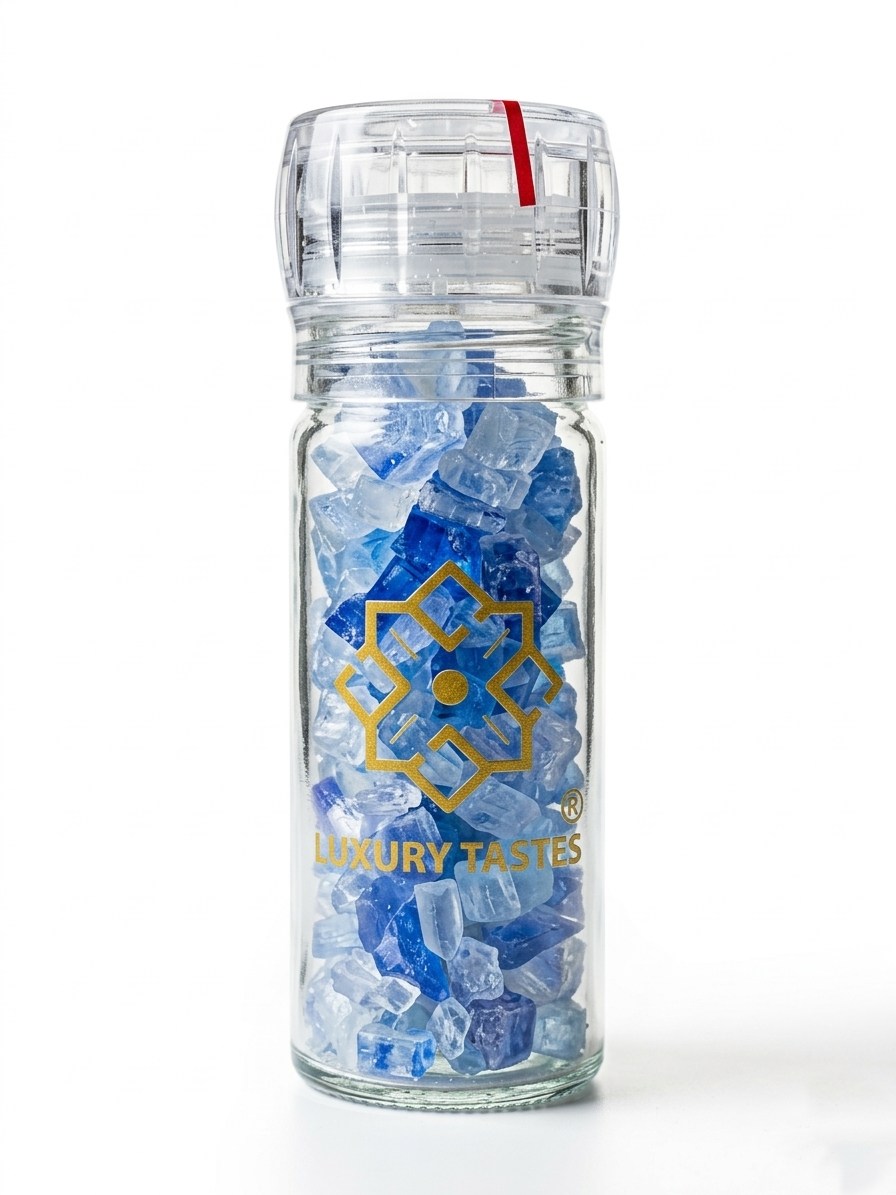
The Optical Physics of Mineral Purity: Everything You Need to Know About Persian Blue Salt
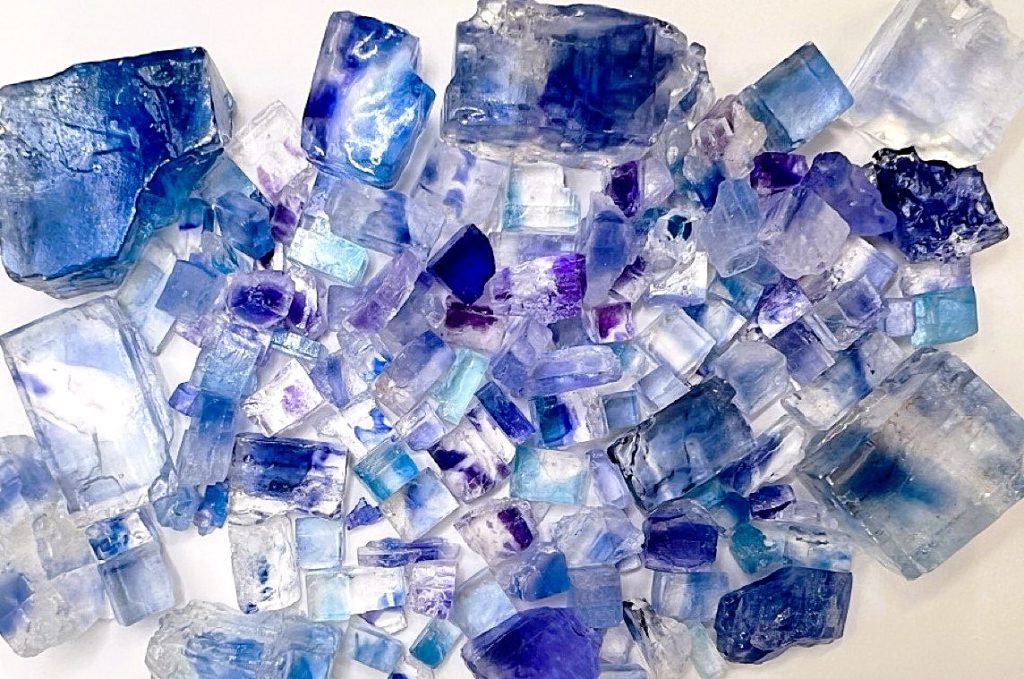
In the international landscape of luxury commodities, rarity is often dictated by organic scarcity, demanding extraction methods, and precise geological conditions. While options like pink rock deposits or solar sea flours are widely available, Persian Blue Salt stands as the rarest and most visually striking mineral in existence.
From an Industrial Engineering and material science perspective, this mineral is not simply a seasoning; it is a preserved geological snapshot. Its unique properties are driven by structural lattice shifts and deep-time mineralization.
Understanding its molecular composition, history, and structural behavior is essential for navigating the upper echelons of the global mineral market, as outlined in the baseline criteria established in The Global Salt Hierarchy: Top 5 Most Popular Salts in the World.
1. The Geological Origins: Deep-Time Evaporation
The defining characteristic of Persian Blue Salt is its geographic exclusivity. It is harvested from ancient evaporated sea beds hidden deep within the mountain ranges of the Semnan province.
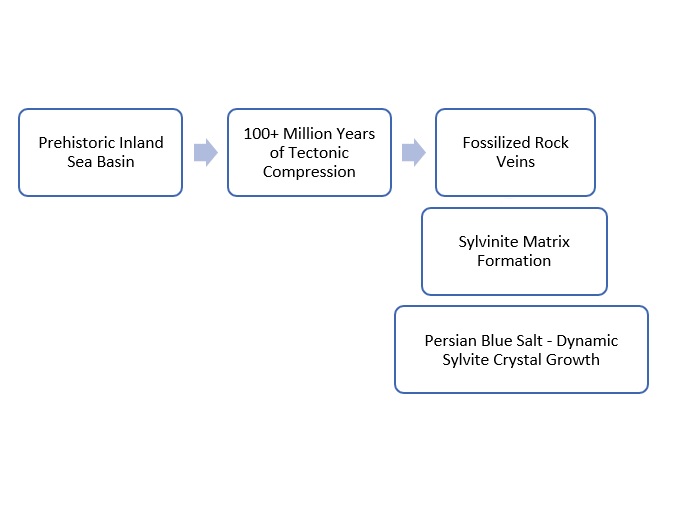
Over 100 million years ago, during the Cretaceous period, massive prehistoric inland oceans dried up due to shifting tectonic plates. Intense evaporation layers were sealed under heavy mountain massifs, protecting them from modern environmental pollutants and microplastics.
According to geological deposition frameworks archived by Britannica, these ancient deposits experienced immense, continuous tectonic pressure. This compression fused the sodium chloride lattice with high concentrations of Sylvite (Potassium Chloride - KCl), forming the rare structural ore known as Sylvinite.
2. The Science Behind the Color: Structural Optical Illusion
A common misconception is that the blue coloration is caused by a chemical pigment or trace heavy metals (like copper or cobalt). However, laboratory analysis reveals that the color is an optical phenomenon known as Structural Coloration.
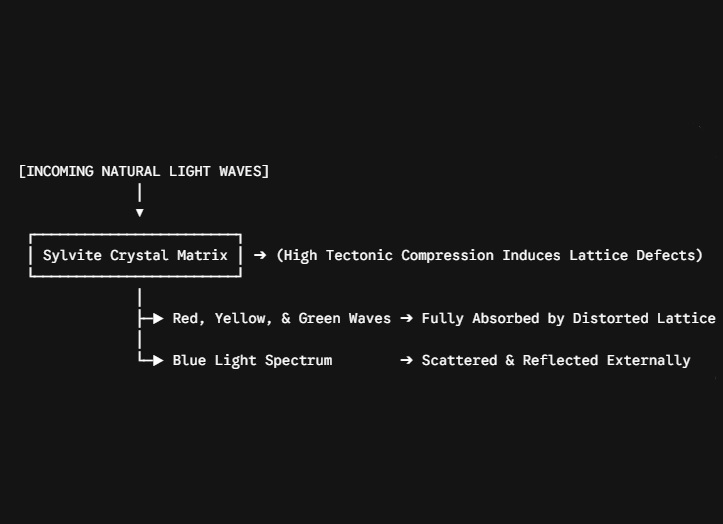
The Mechanics of Light Scattering
- Lattice Distortion: The extreme gravitational pressure from the surrounding mountains permanently altered the physical geometry of the salt crystals, creating tiny structural defects in the sodium chloride matrix.
- Selective Absorption: When natural light passes through a crystal of Sylvinite, these lattice defects absorb the longer wavelengths of the light spectrum (red, yellow, and green).
- Refraction: The shorter, higher-frequency blue wavelengths cannot pass through the distorted crystal. Instead, they bounce off the defects, refracting a vibrant sapphire-blue hue directly back to the human eye.
- The Crushing Effect: Because the blue color is entirely structural rather than a chemical pigment, grinding the crystals shatters these specific lattice defects. As a result, freshly ground blue salt instantly returns to a pure, brilliant white powder.
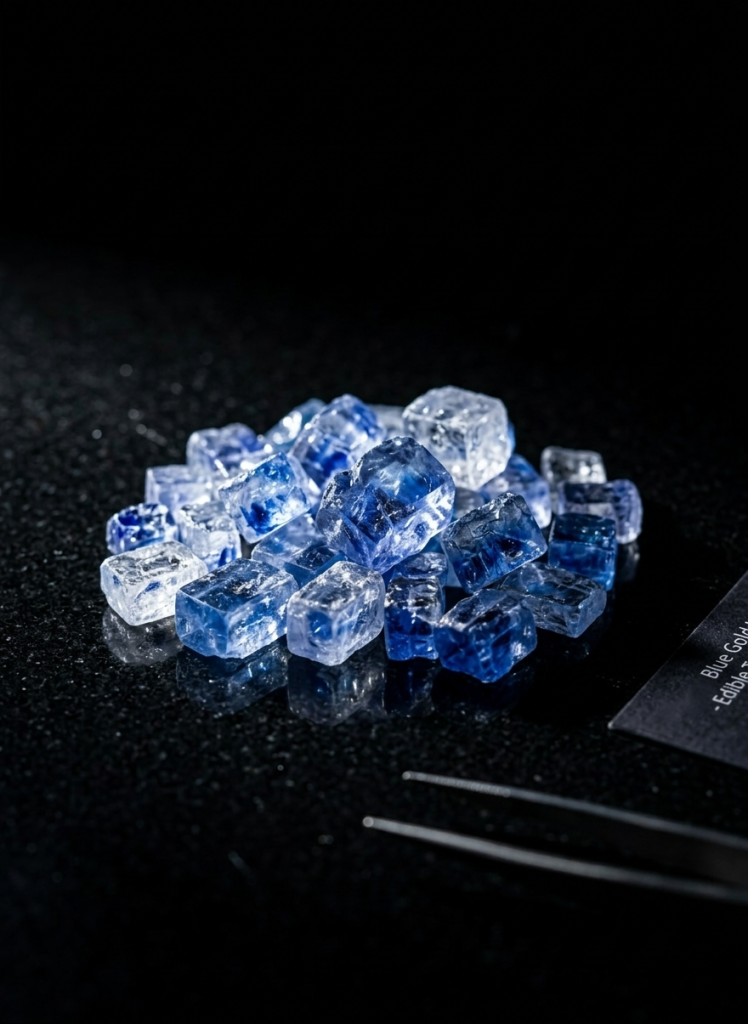
3. Sensory Profiling: The Dual-Stage Taste Profile
The chemical presence of potassium chloride (KCl) wrapped inside the sodium chloride ($NaCl$) matrix gives blue salt a unique, two-stage taste profile found in no other mineral.
- Phase 1: The High-Intensity Shock: Upon first contact with moisture on the tongue, blue salt delivers an immediate, sharp burst of saltiness. This occurs because the porous structure of the compressed rock allows the sodium ions to dissolve rapidly.
- Phase 2: The Mild, Sweet Undertone: As the initial sodium surge fades, the potassium ions dissolve, leaving a clean, smooth, slightly sweet taste. This clean finish makes it an exceptional choice for balancing delicate foods without leaving a harsh, lingering bitterness.
4. Operational Precision: Cultivating Innovation
At Green Trade Chain Ltd, our Agri-Tech Infrastructure views luxury minerals as precise variables capable of enhancing functional health. Sourcing an ultra-rare fossilized rock salt like Persian Blue requires strict quality controls to protect its fragile crystal matrix from moisture degradation during transit.
This focus on structural design guided the creation of our signature Luxury Tastes Saffron Desert Salt.
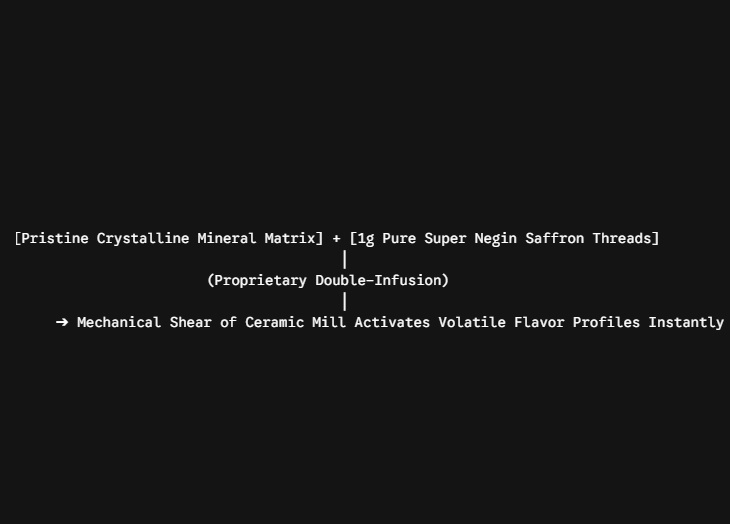
While blue salt relies on natural potassium inclusions for its flavor profile, we utilize ancient, microplastic-free Kalahari Desert minerals as a protective carrier for 1g of pure Super Negin Saffron threads—the highest commercial grade globally.
When passed through our custom Refillable Gourmet Spice Mill, the mechanical grinding action shatters the mineral matrix. This instantly releases fresh saffron oils onto your dish, delivering an even golden hue and maximum antioxidant bioavailability right at the table.
5. Global Rarity Matrix: Premium Mineral Benchmarks
To understand its position within the international market, blue salt must be evaluated alongside other top premium varieties.
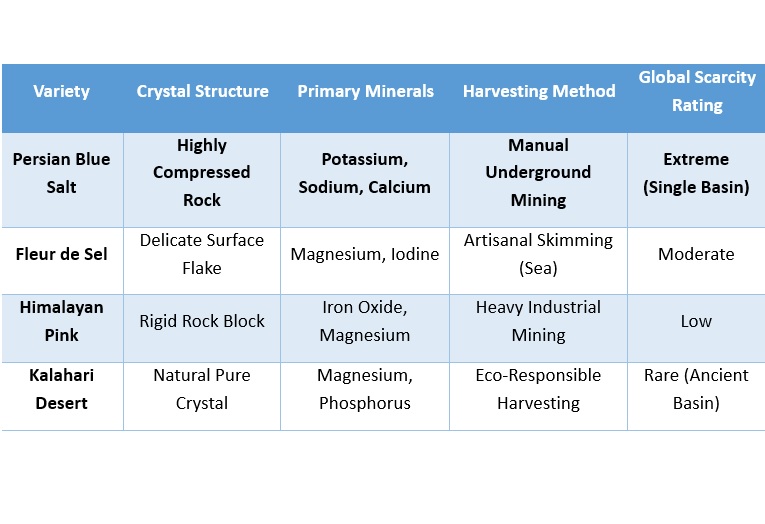
Conclusion: The Peak of Luxury Mineral Sourcing
Persian Blue Salt is far more than a simple table condiment; it is a rare geological masterpiece that showcases the incredible power of prehistoric pressures and natural crystal formation. From its unique blue light refraction to its two-stage flavor profile, it represents the absolute peak of mineral luxury.
True luxury relies on uncompromised traceability and scientific precision. Discover the future of engineered flavor and explore our exclusive mineral collections by visiting Luxury Tastes.
About the Author:
Behdad Gitinezhad, PhD, CMgr, is the Founder and R&D Executive of Green Trade Chain Ltd. As a Chartered Manager (CMgr) with a PhD in Industrial Engineering, his research focuses on integrating advanced industrial systems and AI-driven frameworks to automate the production and optimisation of high-value botanical and mineral commodities.