The True Price of Real Saffron in 2026: What a Gram Should Cost — and Why Cheap Saffron Costs More
It takes more than 150 crocus flowers, opened at dawn and stripped by hand before the sun climbs too high, to yield a single gram of true Super Negin saffron. Yet the internet will cheerfully sell you a “bargain” gram for less than the price of a cappuccino. One of those two things is a luxury; the other is the most expensive mistake a serious cook can make.
Why Saffron Commands Its Price: The Economics of a Hand-Harvested Luxury
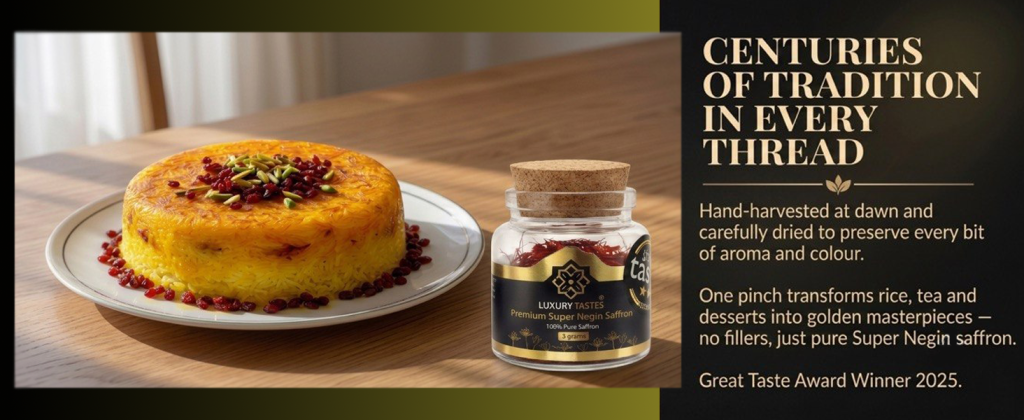
Saffron is not expensive by accident, nor by marketing. It is expensive because it remains the most labour-intensive harvest in world agriculture. Each Crocus sativus flower produces just three crimson stigmas, and each must be picked and separated by hand — no machine has ever matched the delicacy of experienced fingers working through a dawn harvest. Industry estimates consistently place the requirement at roughly 150,000 to 170,000 flowers, and between 370 and 470 hours of skilled labour, for a single kilogramme of finished threads.
The harvest window compounds the arithmetic. The autumn crocus blooms for only a few weeks each year, and flowers picked after mid-morning lose volatile aroma compounds to the heat. Every gram you buy is therefore the product of a brief, unrepeatable window of human skill — a craft refined over centuries on the high plains of the Persian plateau and carried today into precision, technology-led cultivation.
History priced it the same way. Saffron threads travelled the great trade routes alongside silk and gold, were weighed against silver in medieval European markets, and coloured the robes of royalty for three millennia before the first modern luxury house opened its doors. When commentators call saffron “red gold”, they are not reaching for a metaphor; they are describing a commodity whose value has outlasted every currency it was ever traded in. The price of a genuine gram in 2026 is simply the latest entry in one of the longest unbroken valuations in human commerce.
Saffron Prices in 2026: The Honest Numbers
What the global market tells us
The global saffron market reached approximately US$1.5 billion in 2026 and is forecast by Mordor Intelligence to exceed US$2 billion by 2031 — growth driven not by volume but by premiumisation, traceability and origin verification. Climate pressure on traditional growing regions tightened supply through 2025, and analysts expect continued price volatility into 2027. In plain terms: genuine saffron is becoming scarcer and more valuable, not cheaper.
Reading a price tag like a professional
At UK retail in 2026, authentic saffron spans roughly £2 to £12 per gram — but that range conceals a hierarchy. What separates the top from the bottom is measurable chemistry: international grading standards assess crocin (colour), picrocrocin (taste) and safranal (aroma). Grade 1 threads must exceed a colouring strength of 200; Super Negin — the all-red, unbroken tip of the stigma — routinely surpasses 250 and represents a low single-digit percentage of any harvest. If a price looks too good for that chemistry, it almost certainly is. Our definitive buyer’s guide to Super Negin explains the grading ladder in full.
Why quoted prices vary so widely
Two jars labelled “premium saffron” can differ in price by a factor of five for reasons that are entirely legitimate — and others that are not. Harvest year matters: threads lose colouring strength measurably within eighteen months, so current-season stock commands a premium over warehouse stock. Cut matters: Super Negin tips cost more than Negin, which costs more than whole stigmas with their pale style attached, because you are paying for pigment density rather than dead weight. Packaging, certification and award pedigree add honest cost. What should never explain a low price is the product itself — which brings us to the least discussed number in the spice trade.
The Hidden Cost of Cheap Saffron
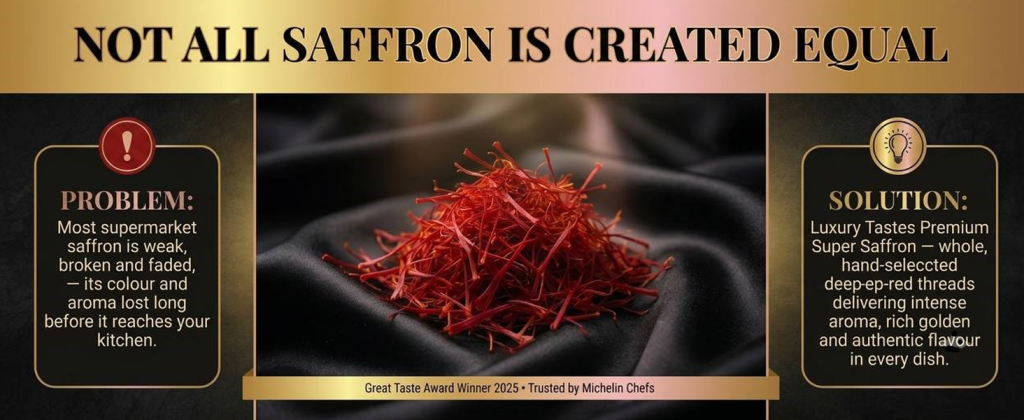
Here is the uncomfortable economics of the bargain gram: given the labour arithmetic above, a genuine gram of Grade 1 saffron cannot reach a UK shelf for £2. What can reach it is safflower, dyed corn silk, moisture-loaded threads or exhausted stigmas re-coloured with synthetic dye. Cheap saffron is rarely saffron at all. Peer-reviewed spectroscopic screening published in Food Chemistry (Petrakis & Polissiou, 2017) demonstrated how frequently retail saffron is adulterated with plant material and colourants — a finding echoed across a decade of independent academic surveys of the European market.
The buyer of counterfeit saffron pays three times: once at the till, again in the dish it fails to transform, and a third time in the dishes never attempted. Measured by what actually reaches your plate, the £2 gram is the dearest spice you will ever buy.
How Much Should Real Saffron Cost Per Gram?
The direct answer: in 2026, authentic Grade 1 or Super Negin saffron typically costs £5 to £8 per gram at UK retail, reflecting roughly 150 hand-picked flowers per gram, certified grading chemistry and traceable provenance. Exceptional award-winning lots sit somewhat higher; anything below about £3 per gram warrants scepticism, as genuine production costs make that price implausible. A fair benchmark: Luxury Tastes’ Great Taste 2-Star Super Negin retails at £19.95 for 3 grams — £6.65 per gram.
Six Questions to Ask Before You Pay for Saffron

A sophisticated buyer does not need a chemistry degree — only the right questions. Ask, first, for the harvest year: a reputable house will state it without hesitation. Ask for the grade and its colouring strength, expressed as a number, not an adjective. Ask where the crop was grown and whether its journey can be traced — verifiable provenance is the single strongest predictor of authenticity. Ask whether the threads are all-red tips or include the pale style, since the difference is pure pigment economics. Ask how the saffron has been stored, because light and humidity quietly tax its value. And finally, ask yourself whether the price is consistent with 150 hand-picked flowers per gram. A seller who answers all six questions plainly has nothing to hide; a seller who answers none of them has already told you everything.
The Reframe That Matters: A Luxury Measured in Pennies Per Plate
Saffron’s price per gram misleads because nobody cooks with a gram. A risotto or paella for four asks for 0.1 to 0.15 grams — a generous pinch. At £6.65 per gram, that is roughly 17 to 25 pence per person for the most storied ingredient in the Western culinary canon. A single glass of modest wine costs twenty times more. Understood per serving rather than per gram, Grade 1 saffron is arguably the most accessible true luxury in existence — provided it is real.
The economics improve further with care. Stored in an airtight glass jar, away from light and humidity, quality threads hold their character for many months — meaning a single 3-gram jar comfortably seasons twenty to thirty considered dishes across a year of cooking. Few luxuries amortise so gracefully: the same outlay as one restaurant dessert, returning colour and perfume to every special occasion on your calendar.
Provenance, Traceability and the Future of Fair Pricing
The lasting correction to saffron’s price confusion will come from transparency, not discounting. Blockchain-backed traceability, digital grading certificates and controlled-environment cultivation now allow a discerning buyer to follow a jar from flower to table — the same data-driven approach we explored in our journal piece on hydroponic saffron cultivation. When provenance is verifiable, price finally means something: it becomes a record of labour, chemistry and care rather than a gamble. That is the standard the premium market is converging on — and the standard by which every gram should be judged.
The Considered Conclusion
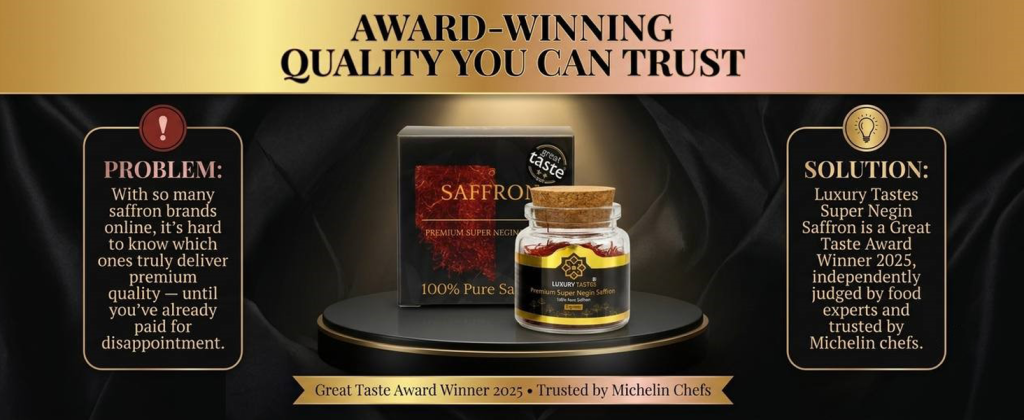
Real saffron has never pretended to be cheap; it pretends nothing at all. Its price is simply the truthful sum of 150 flowers, a dawn harvest and a grading standard most of the world’s crop cannot meet. Pay it once, properly, and every dish thereafter repays you in colour, aroma and provenance you can trust. Explore our Grade 1 Super Negin saffron collection — Great Taste 2-Star awarded, fully traceable, and priced with nothing to hide — at www.luxurytastes.com.
About the Author: Behdad Gitinezhad, PhD, CMgr, is the Founder and R&D Executive of Green Trade Chain Ltd. As a Chartered Manager (CMgr) with a PhD in Industrial Engineering, his research focuses on integrating advanced industrial systems and AI-driven frameworks to automate the production and optimisation of high-value botanical and mineral commodities.